


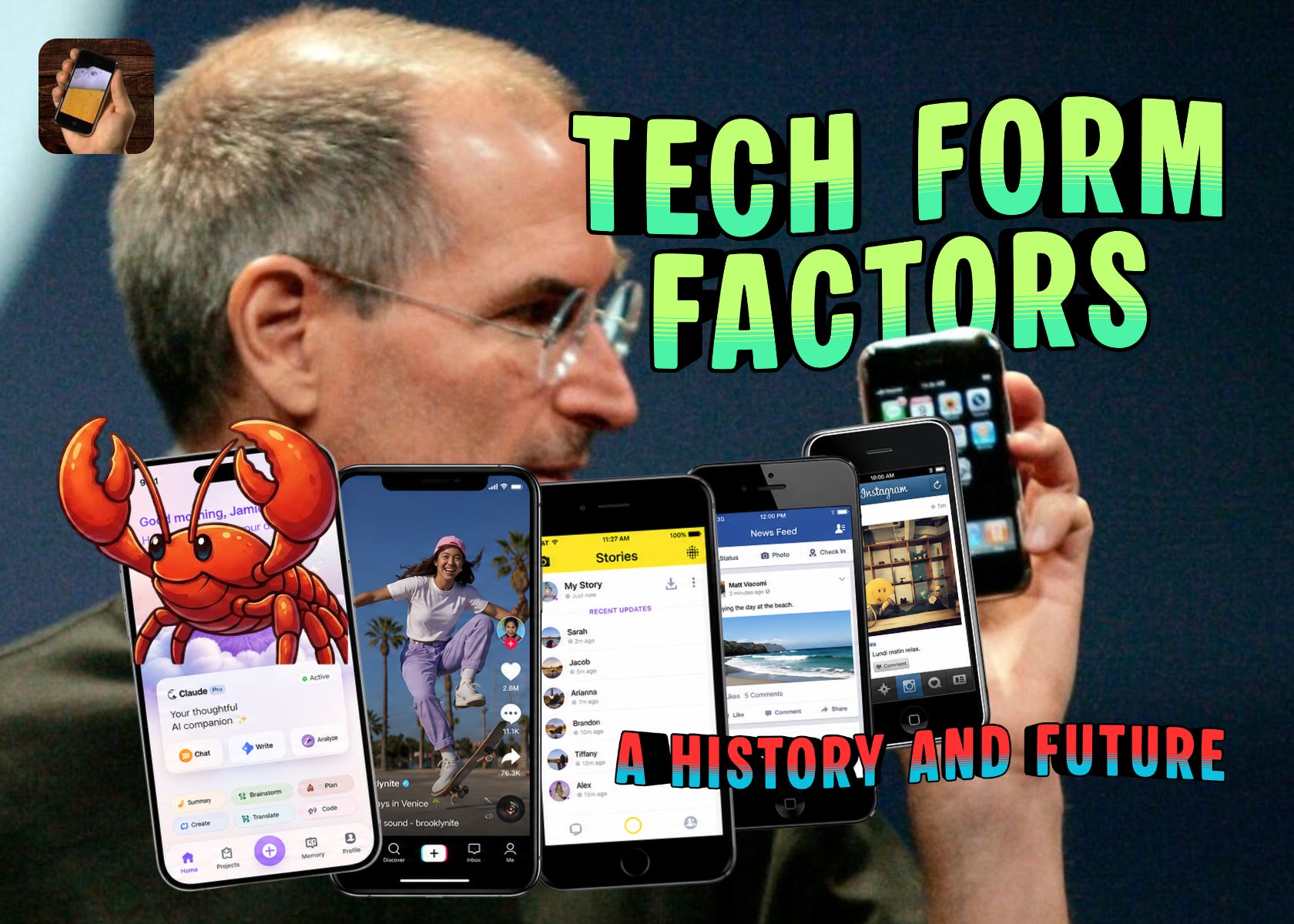
This is not a super-technical deep dive. But I’ve been thinking it for a long time.
It’s a piece about UX. About form factors; past and future. Think of it as a palate cleanser between deep-dives on concurrency, Metal, and job interviews.
Chill (⛄️).
Whoever cracks this is going to make a billion dollars. Legit. That’s 5.5 million years of Premium Membership to Jacob’s Tech Tavern. Perhaps a few more if you subscribe annually.
But, before we get there, a history lesson 🧑🏫
Sponsored Link
Shipaton 2026: build and launch your next iOS app
Indie iOS devs: this is your excuse to finally ship. Shipaton 2026 is RevenueCat’s hackathon for app builders, with over $1M worth of prizes. Build a new iOS app, add RevenueCat, and launch between August 1st and September 30th.
Check it out and register here.
Inception
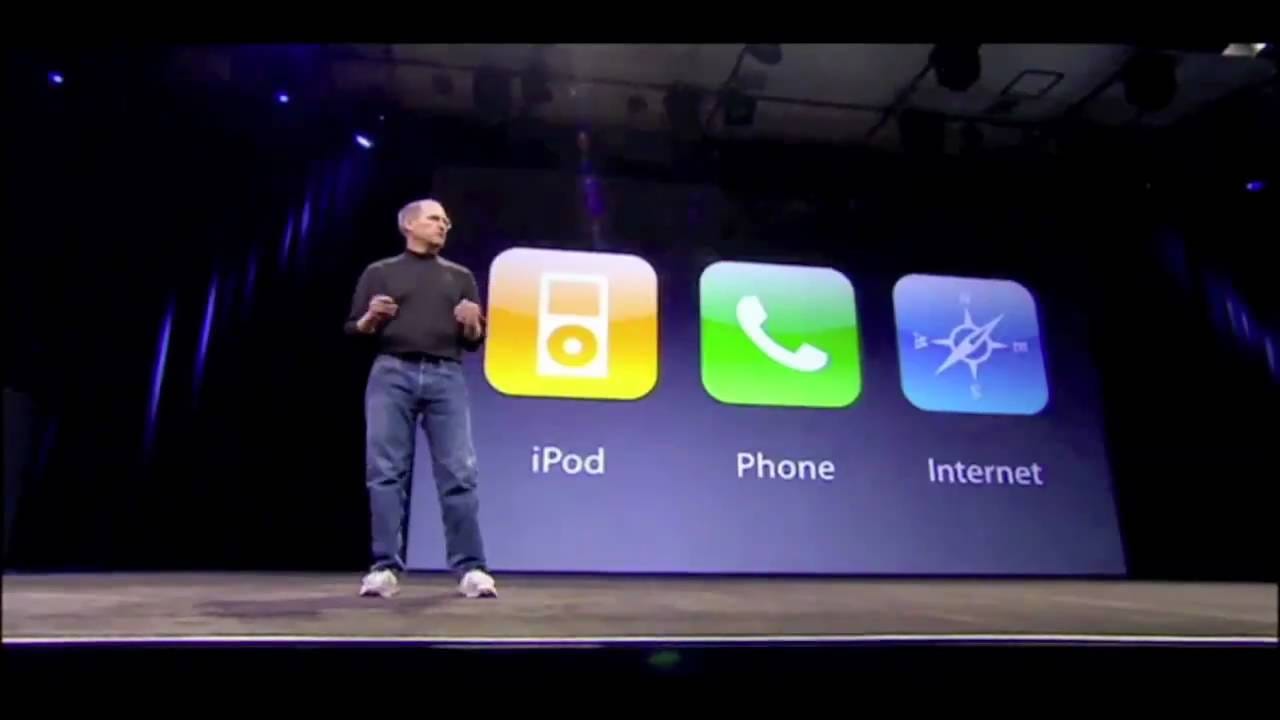
In 2007, the iPhone was announced. Like ChatGPT 15 years later, or Netscape Navigator 13 years prior, it ushered in the next great technological era: Mobile. In one swoop*, consumers had access to:
Multi-touch capacitive screen
A desktop-class web browser
Cellular and Wi-Fi networking
GPS and location
Motion sensors
A decent photo and video camera
An App Store that made your device more valuable every day
And you got all this in a portable handheld device!
*two swoops if you pedantically point out that the App Store/GPS/video didn’t arrive ‘till 2008. I see you.
Early apps got nearly-free distribution on relatively crappy hardware. To-do lists, fart apps, and static PNGs were making tens of thousands of dollars*.
*It’s true. I once worked with a greybeard who paid his mortgage by shipping a calendar app in 2010 and getting untold thousands of paid downloads.
Heavy hitters like Facebook scrambled to stake a claim in this new land-grab. So Zuck did what he knew best, shipping an HTML5 app that ported the existing news feed from the web.
Nobody knew how to make the most of the new platform. Not Meta. Not Apple. Not even Instagram.
In 2010, this mobile-native new challenger wrote OpenGL shaders to filter photos and squeeze out value from the meagre early camera hardware, transforming your iDevice into a surface for creation as well as consumption.
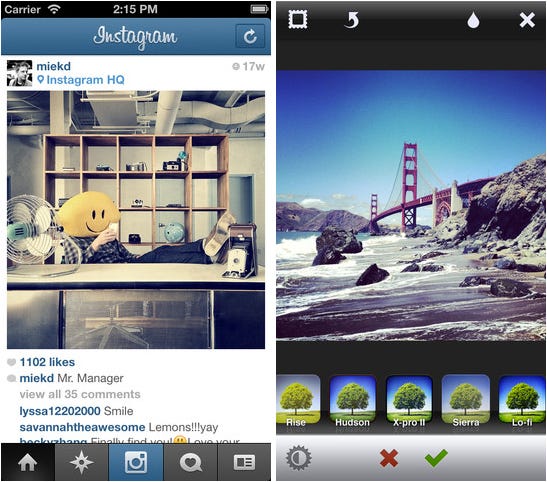
Many of the big hitters you know and love to hate began in this early scramble: Uber. Snapchat. Instagram. WhatsApp. Tinder. Waze. Erm, Yik Yak.
Business Model Innovation
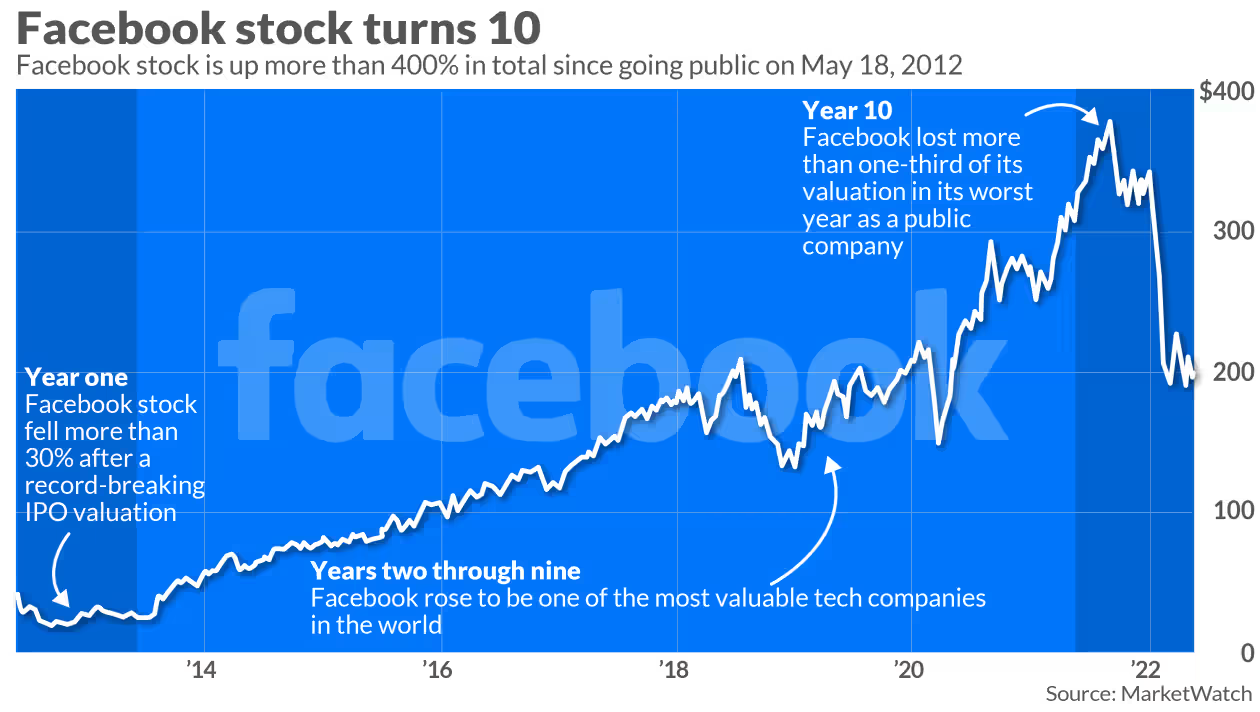
In 2012, Facebook finally got its sh*t together and figured out how to monetise mobile, placing ads natively alongside items in the news feed.

In hindsight, this seems so obvious, but consider the perspective of the most beloved product that ever existed on the web. I’m not kidding. For years, 70% of people who had ever registered for Facebook were daily active users.
Your users are used to unobtrusive banner ads. How could you risk polluting the news feed, risking a defection to Instagram and WhatsApp*, for an unproven revenue opportunity?
*Remember those glory days when they weren’t all the same company?
Selling ads as content-ish objects, integrated alongside infinite updates from your friends, turned out to be drastically more profitable than the web could ever dream.
Form Factor Innovation
Social was the hottest industry in early-2010s-startupland. Business model innovation is nice, but the cool kids (who adopt your product) could not care less if you were monetising them. They probably also didn’t care that much about their data at the time. I dunno. I wasn’t one of them.
The big story is form factor. Well. The form factor is Story. Stories, that is.
Ahem.
Late 2013. Snapchat unleashed Stories on the world.
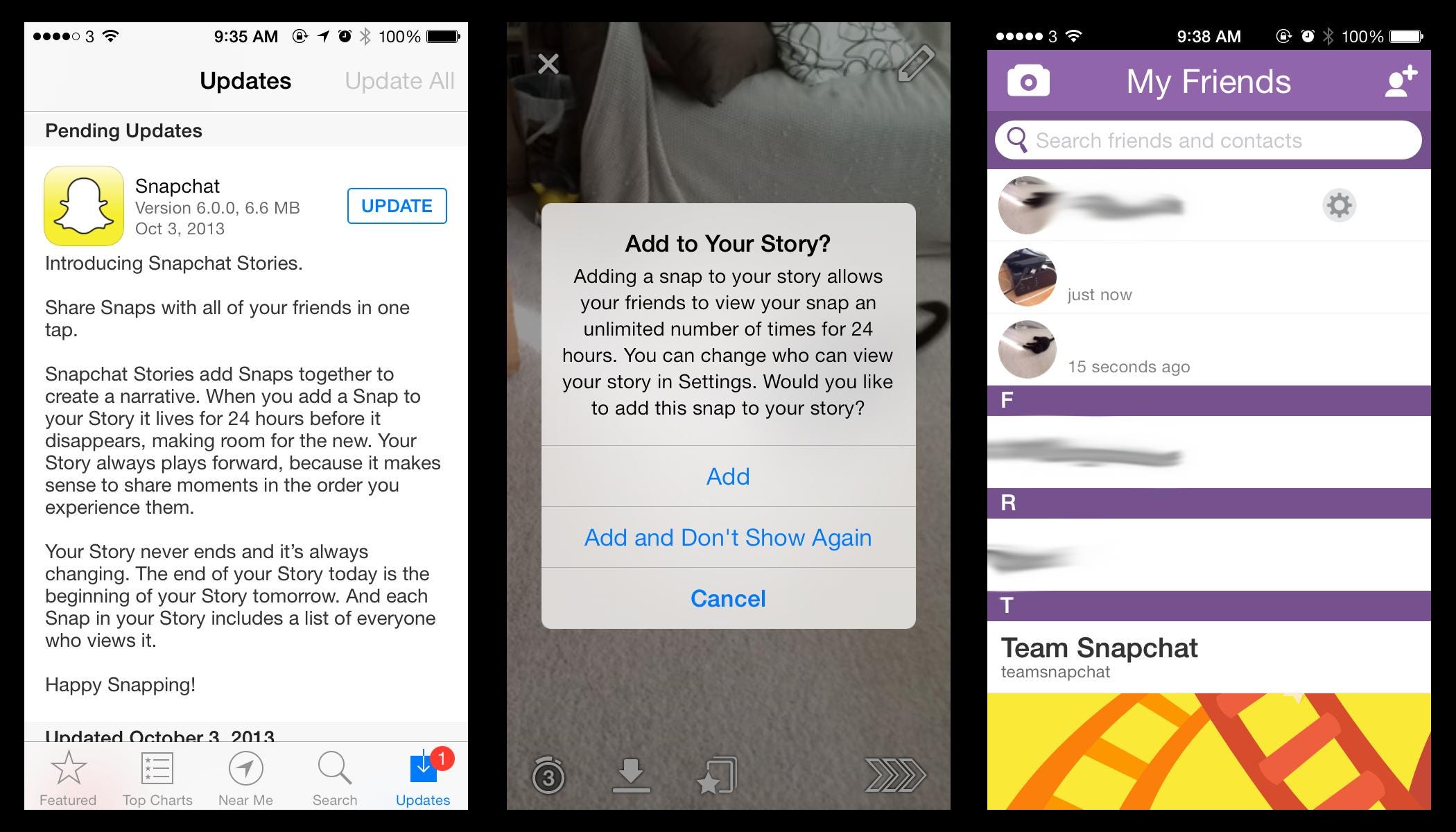
At last, there was a form factor that felt perfect for mobile, on both the creation and consumption sides:
It used the hardware camera as the starting point; vertical by default
It took Snapchat’s ephemeral messaging and turned it into broadcasting
This ephemerality encouraged mundane, casual, “low pressure” posting
This, in turn, encouraged repeat daily posting and consumption
Fullscreen consumption captured your whole attention and encouraged “tapping through” all the updates from your friends.
When you put everything together like that, it was obviously the ideal form factor for an early mobile device.
But also, it still wasn’t that obvious without hindsight.
In 2016, the problem of pressure to post the perfect photo began to really hurt engagement on Insta. Zuckko ripped the stories form factor straight off Speegz. At which point, he decided to yeet it everywhere.
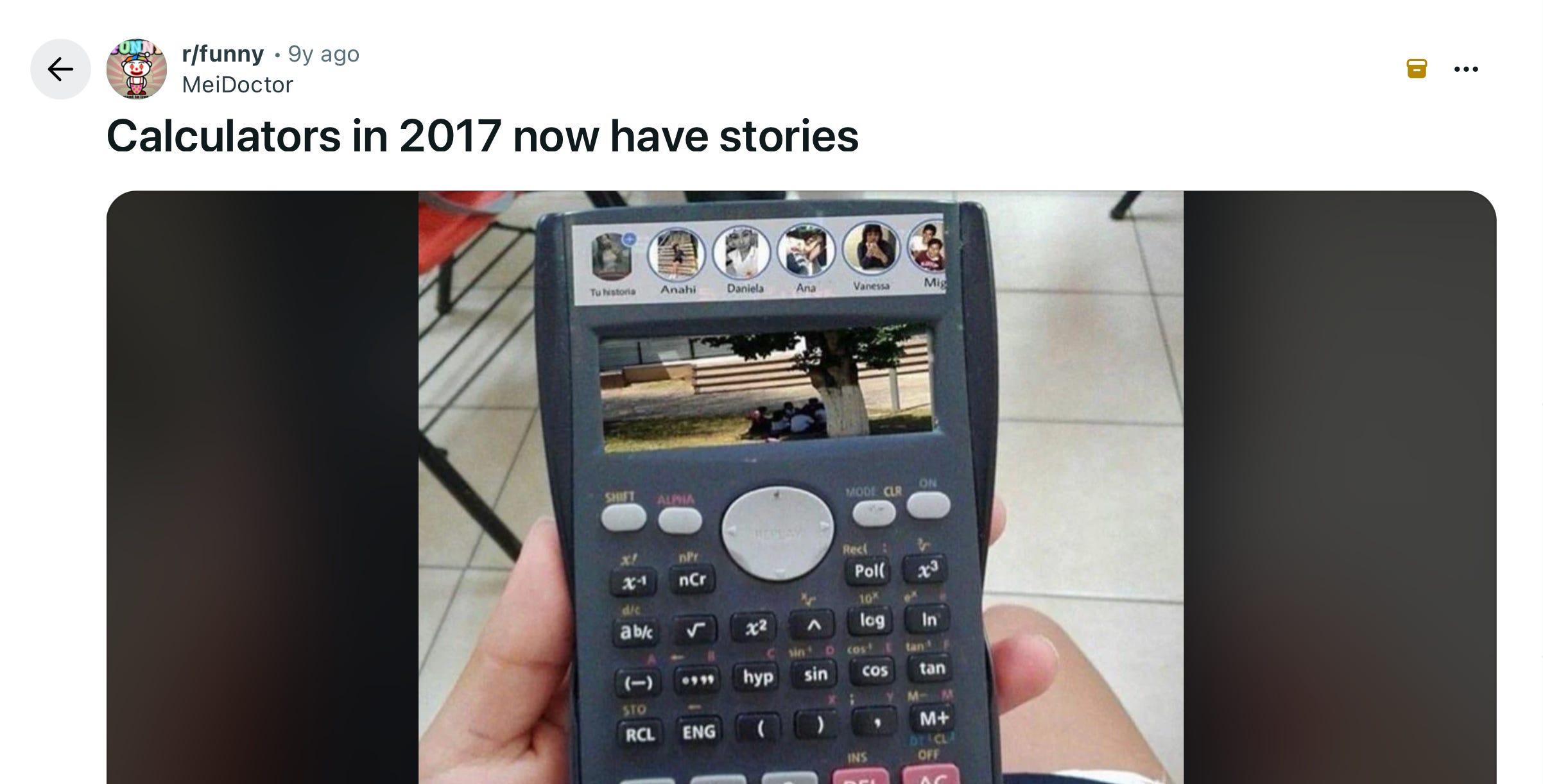
The extremely obvious final form
Today, people no longer casually consume content shared by their acquaintances. Social media has bifurcated into private messaging with close friends; and watching videos made by strangers. Whatever market opportunity there was for catching up with acquaintances has dried up.
TikTok, Instagram Reels, YouTube Shorts, and Snapchat Spotlight (I had to look up the name) have converged on pretty much the exact same form factor. But, again, it all seemed so obvious!
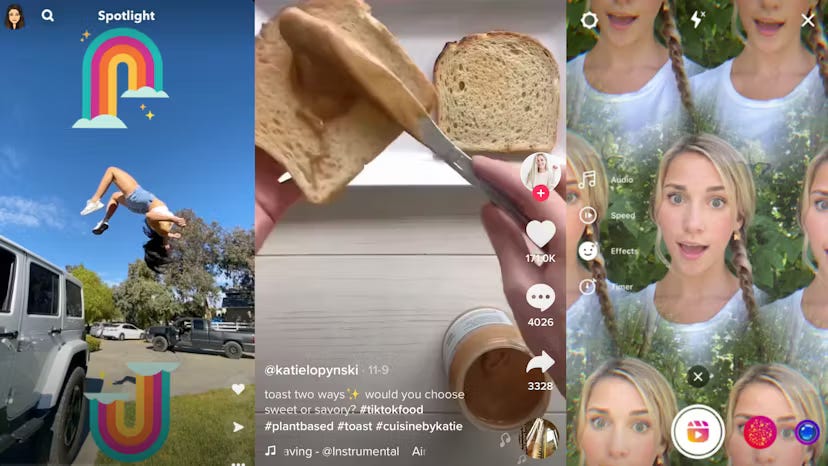
TikTok burst onto the scene in 2019, and forced everyone to adopt its obviously superior form factor (or perish).
It brought the logical conclusion of the fullscreen stories format. Instead of an image, it’s a video. Instead of a crappy 4” screen, it’s on a stonking 6.5” chad of a glass rectangle. Instead of disappearing after six seconds, it’s broadcast to the world in a ruthless Darwinian survival game of attention.
On-demand full-screen video was a predictable ultimate form factor way back in 2010. But failure to implement this wasn’t due to a lack of creativity on those would-be Gen X entrepreneurs.
The reason we didn’t get TikTok in 2009 was due to 4 prerequisites that had to be unlocked in the tech tree:
Bigger screens to enable comfortable passive watching sessions
4G proliferation supplying cheap, fast, mobile data on the go
Good-enough mobile camera hardware (and solid CPUs when editing)
ML and advanced recommendation engines for infinite food on your feed
We truly are living in the future. It might be a bit of a dystopian future, but it’s the future. Every individual has algorithmically-optimised social TV designed to extract the maximal amount of your eyeballs.
Frankly, the recommendation engine was the big one. Musical.ly, the precursor to TikTok, had much of the same DNA. One of the big innovations TikTok brought was insanely clean data, by enforcing full-screen video, one at a time. Turns out, data is actually the most important thing. Another thing that’s obvious in hindsight.
Which makes me think. Was it so obvious in hindsight? There really aren’t many sources predicting fullscreen video. Seriously, read the 2010 source about social TV. It is a little bit Jetsons. I don’t think it quite cottoned on to how the average Joe feels about tech these days.
Right.
In summary.
iPhone launch 2007.
We hit on the “optimal” native form factor of Stories at about 2013.
That’s 6 years.
It wasn’t for another 6 years, 2019, that the ultimate form factor, fullscreen algorithmic video, proliferated.
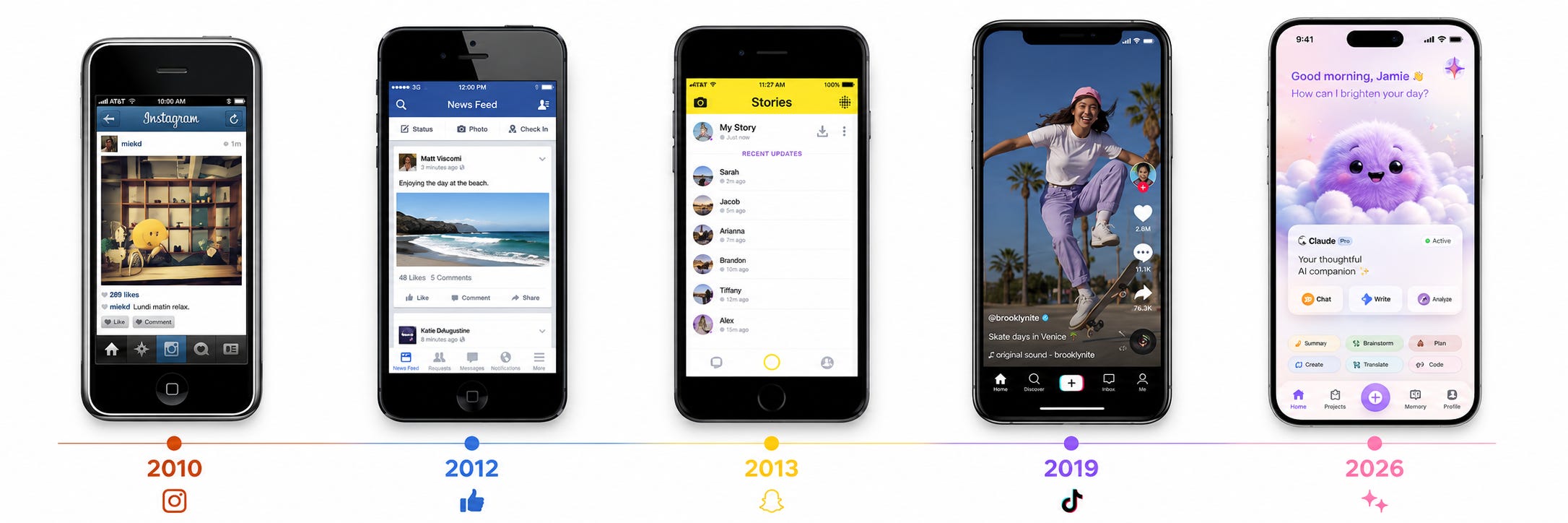
The billion dollar question mark
OK, I’m sure you’re waiting for me to get to the point.
Here’s how you can make a billion dollars.
What is the right form factor for AI?
In November 2022, ChatGPT launched. It was the iPhone moment of artificial intelligence, kicking off the whole AI bull run, and turning around the weird tech hiring winter that began around 2022.
The form factor initially, as now, is “let’s just copy Google Search”. A natural language chat interface on the web is obvious, because it’s the paradigm everyone is used to for interacting with web services.
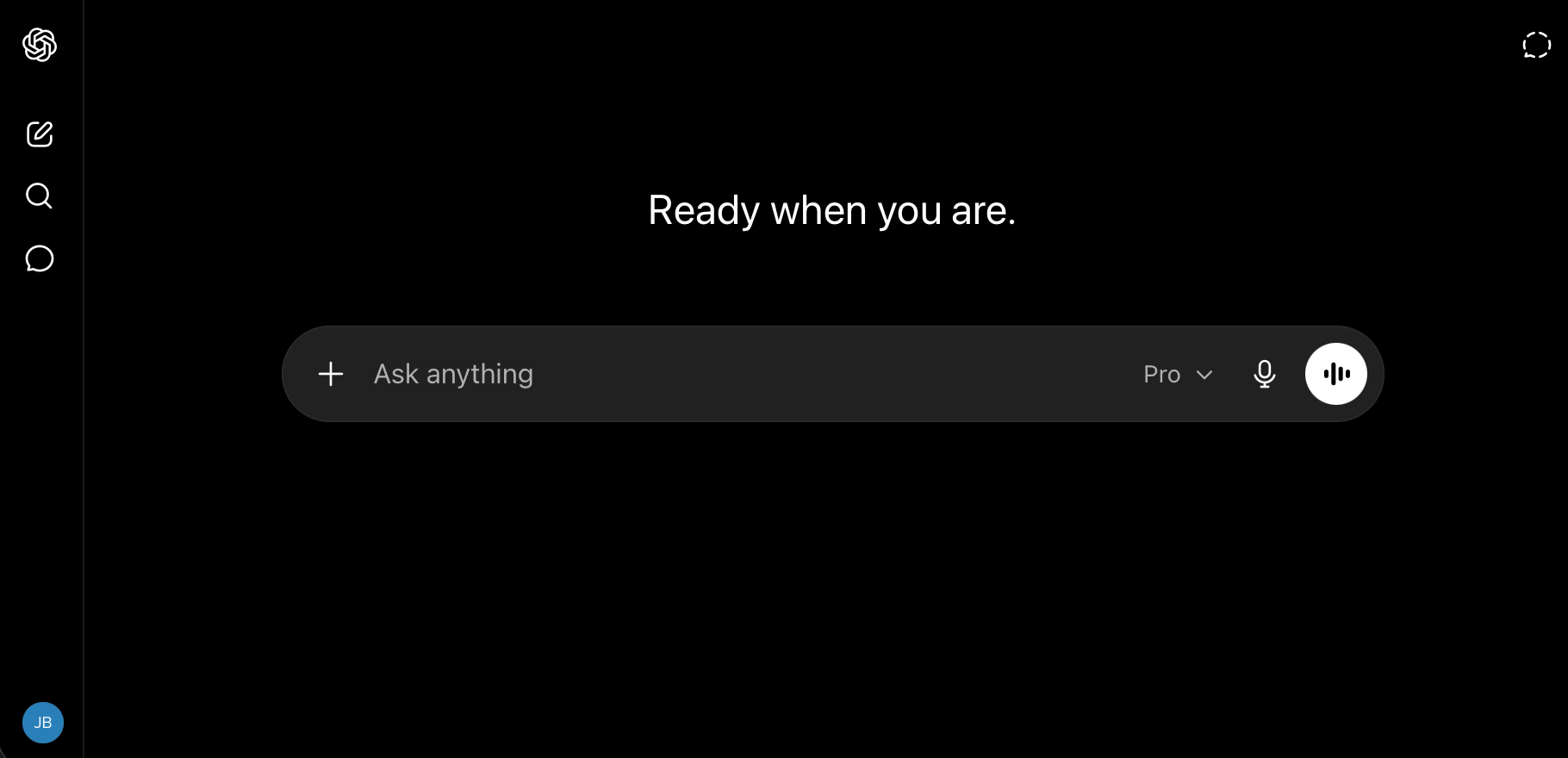
2022. Four years ago.
It’s reasonable to suggest that the AI stories moment, when someone works out the optimal native form factor for the current technology, might be around something like 2028. Maybe 1-3 years in the future.
OpenClaw got pretty close, honestly. It was hyped for a reason.
Texting an AI agent feels natural. When it can remember things, and proactively perform real work on your behalf, it becomes compelling. This was not possible before the tool-calling AI agent format was built.
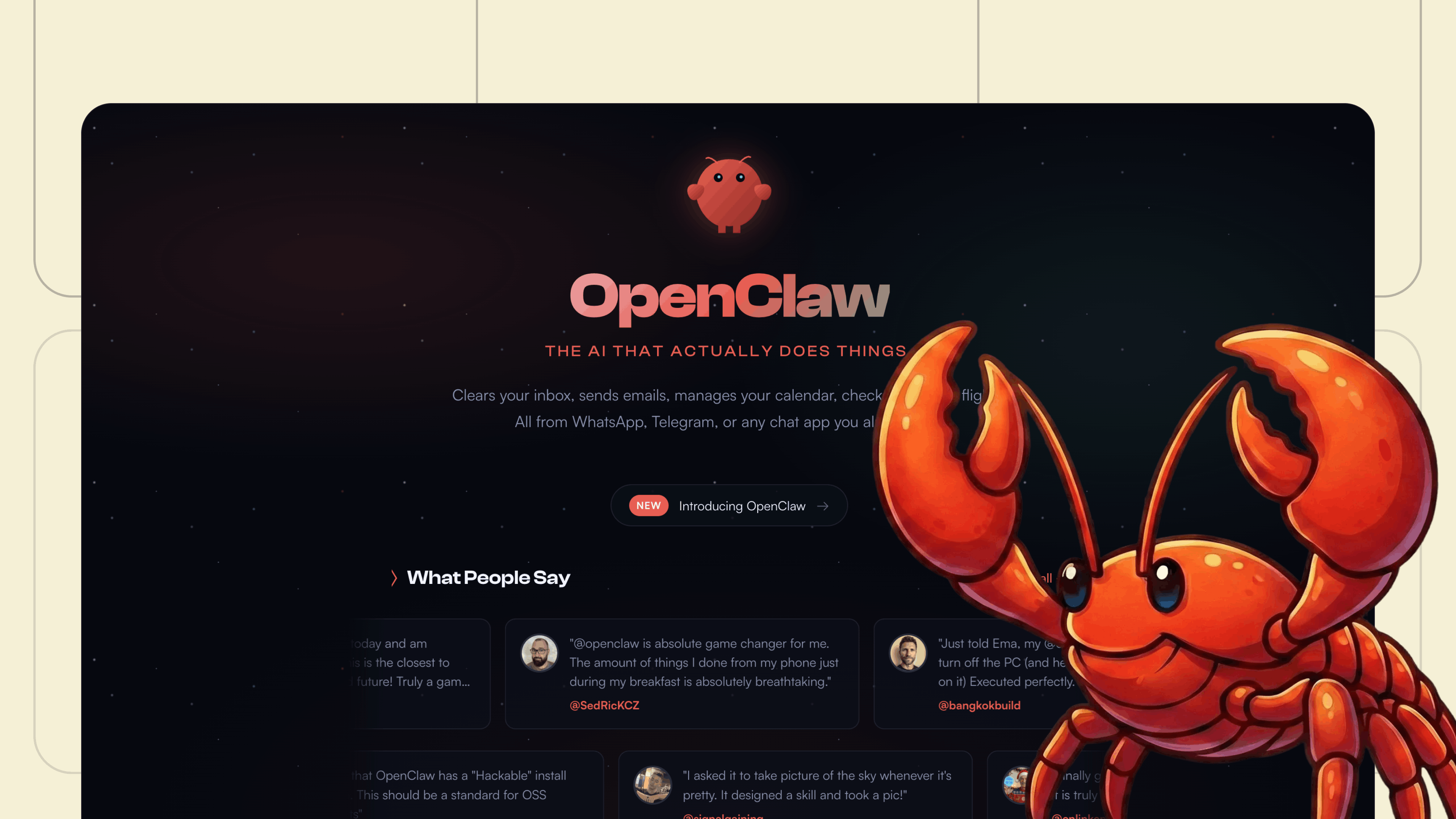
Like all early-days projects, it’s not perfect. Setup is complex, especially if you don’t want to shell out (pun intended) for a Mac mini. It guzzles tokens like nobody’s business. It used to have issues around security. But when you get past this friction, your first experience feels like magic.
I’m not saying that ClawdBot (sue me, Anthropic, I dare you) is the stories moment. But I reckon the incoming stories-moment form factor will be approximately ClawdBot-like, in that it…
...has your logins
…can run autonomously on your own device
…can always be easily contacted
…that proactively does stuff for you
…that Makes No Mistakes™.
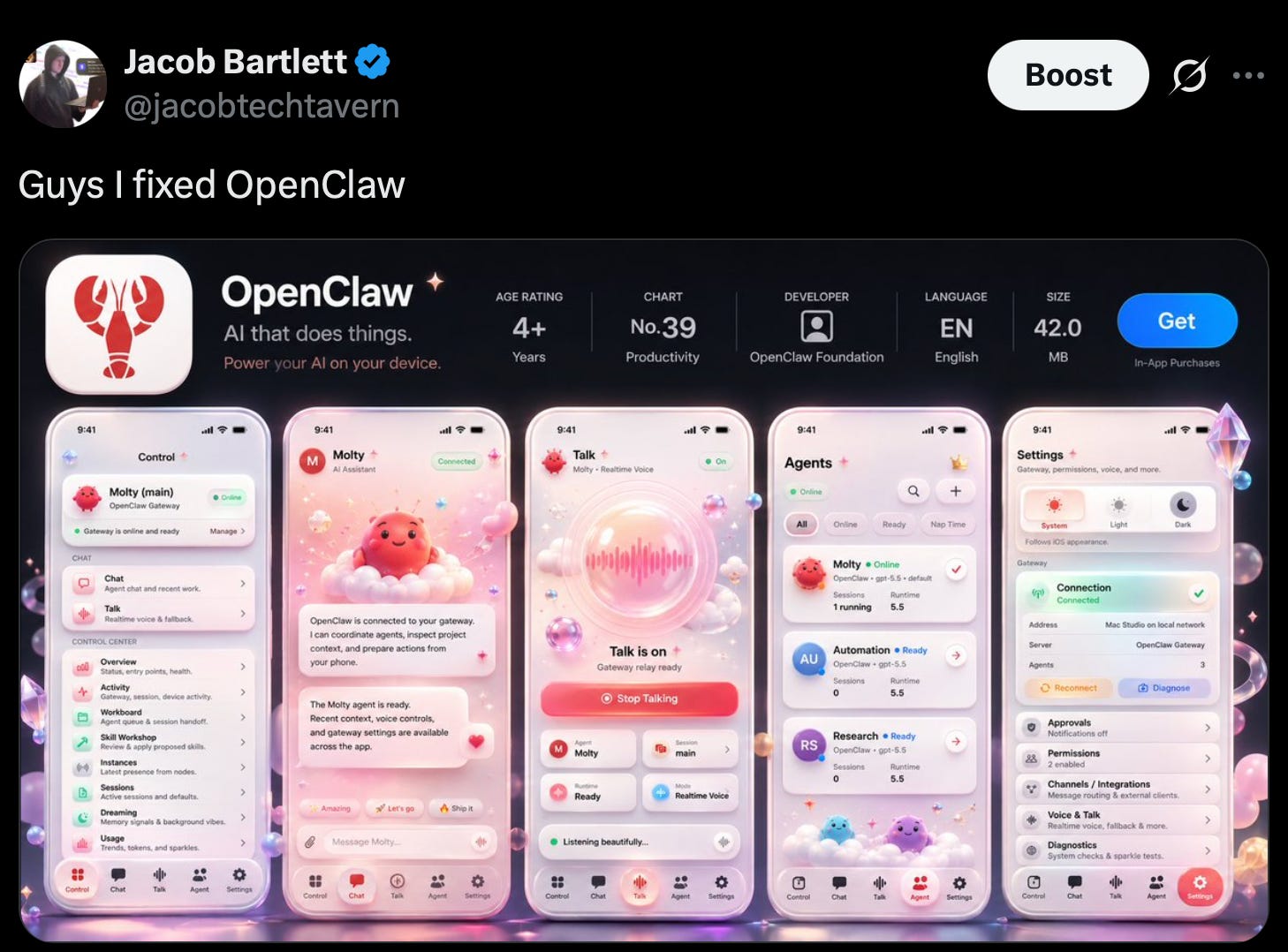
The Stories Moment™ for AI is definitely not far off.
More interestingly, down the line, what are the prerequisites on our tech tree for the ultimate final form?
This isn’t even my final form
Okay, here’s my musings-slash-best-educated-guess.
I’m gonna stake my claim for the “obvious” final form of AI.
Human-brain interface.
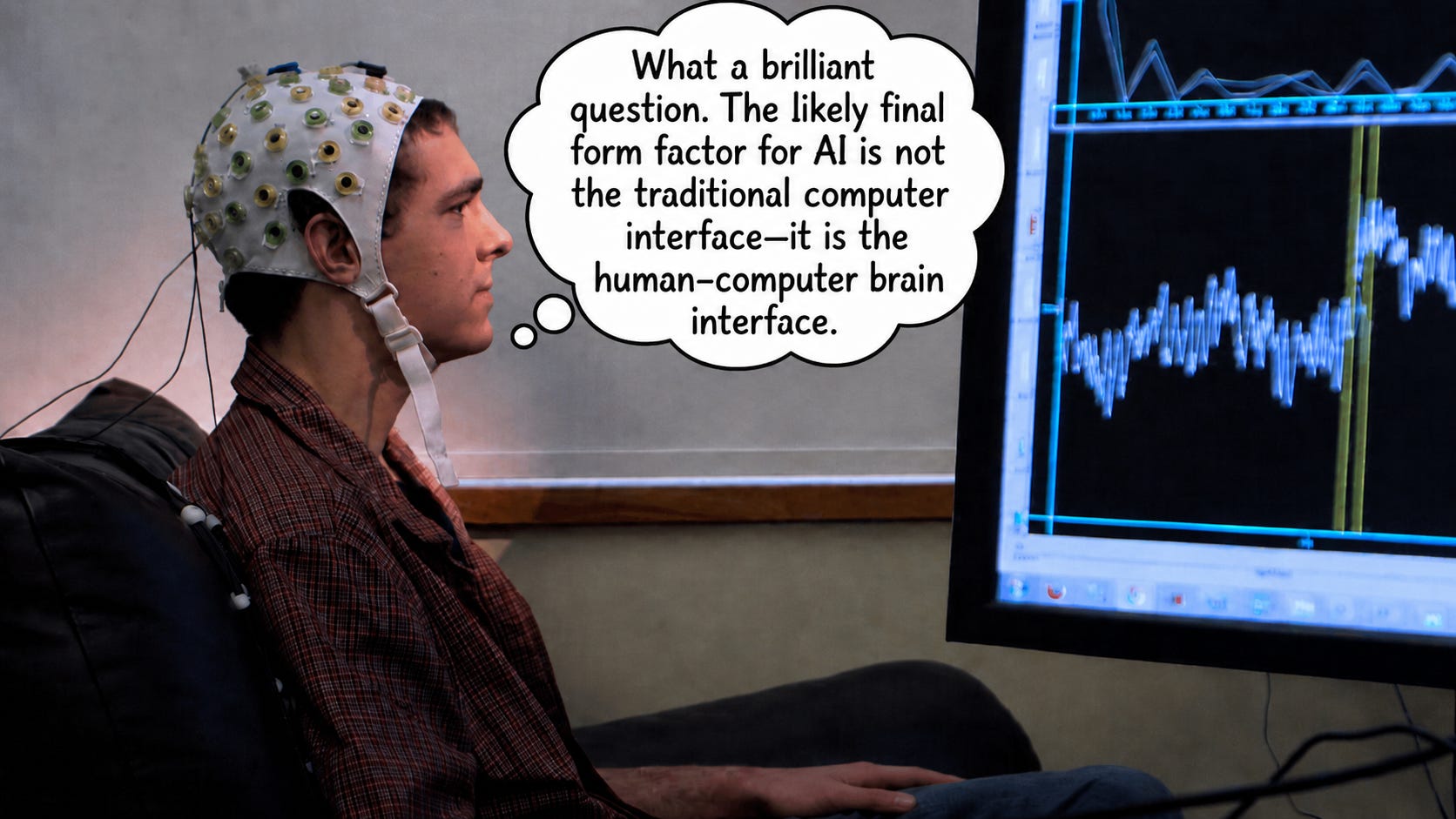
Tim Urban called this back in 2017, 4 years after Stories, but I will make another bet on top for good form:
Apple, with its reputation for privacy, is the only company that is positioned to release a trustworthy consumer hardware device that can read your brainwaves. Plus, with the rate of improvement of open-sourced quantised models, and a giant install base of great inference hardware (Apple Silicon), they have twin moats that nobody else matches.
Trust and distribution might be all you need to win the “personal AI” era.
— Jacob, 2026
Interestingly (I drafted this article before it came out), Meta is making some strides with brainwave reading, but, uh, I don’t know how well that’ll go down with most consumers.
Last Orders
There are really three core layers of the AI stack:
Frontier model labs, of course, like Anthropic, OpenAI, DeepSeek, who are knife-fighting in the mud to build AGI.
Hardware providers, like Amazon, Nvidia, and Google, who are selling spades and printing money.
Application layer players, such as Granola, ElevenLabs, and Midjourney, hunting for the form factor to rule them all.
Unless you have very deep pockets, like nation-state or megacap deep, you’re probably mucking around in the third layer. And so the world has an almost democratic opportunity to discover the right form factor.
I can only guarantee one thing.
When someone cracks it, it’s going to seem so f*cking obvious.
If you enjoyed my post, subscribe free to join 100,000 senior Swift devs learning advanced concurrency, SwiftUI, and iOS performance for 10 minutes a week.
Paid members get a lot more:
⚓️ Access my full library of 50+ paywalled articles
🚀 Read free articles a month before anyone else
🧵 Master concurrency with my full course and advanced training
🧑🚀 Get a free copy of my new eBook, “Land your iOS Tech Job”
❤️🩹 Support independent, sometimes funny, tech writing
Sponsored Link
Shipaton 2026: build and launch your next iOS app
Indie iOS devs: this is your excuse to finally ship. Shipaton 2026 is RevenueCat’s hackathon for app builders, with over $1M worth of prizes. Build a new iOS app, add RevenueCat, and launch between August 1st and September 30th.
Check it out and register here.